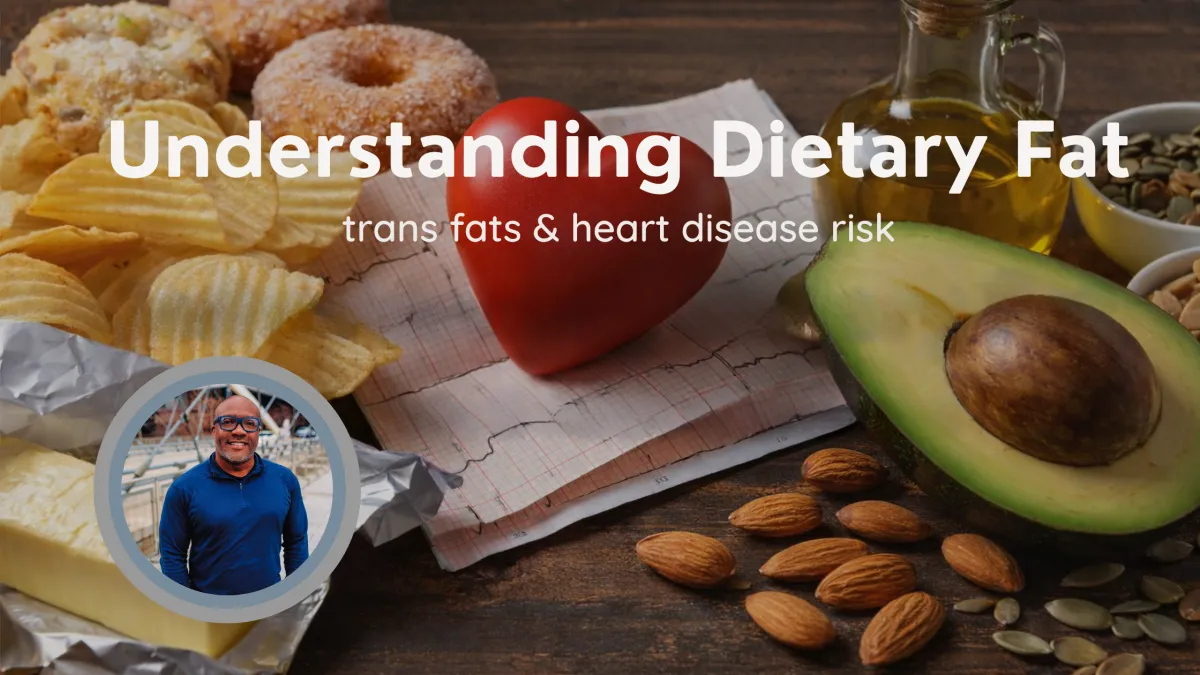
Understanding Dietary Fat
Healthy Fats, Trans Fats & Heart Health
Dietary fat was once public enemy number one. For decades, low-fat products and restrictive diets taught people to fear fat altogether. But science has since corrected the narrative.
Today, we know that fat isn’t the problem—poor fat quality and imbalance are.
When chosen wisely, dietary fat supports heart health, circulation, brain function, hormone balance, and healthy body composition. The key isn’t simply eating fat, but understanding which types of fat to prioritize, which to limit, and how much your body actually needs.
Why the Low-Fat Era Missed the Mark
Low-fat diets often replaced fats with refined carbohydrates and added sugars. This shift contributed to blood sugar instability, elevated triglycerides, increased hunger, and metabolic dysfunction.
Modern nutrition science supports a smarter approach:
Replace refined carbohydrates with high-quality fats rather than eliminating fat altogether.
This shift supports improved cardiometabolic markers, better satiety, and long-term sustainability.
Curious how your current nutrition is impacting your body composition? Schedule an InBody Scan.
Understanding the Basics: What Is Fat?
Dietary fat (lipids) is made up of carbon, hydrogen, and oxygen. It provides more than twice the energy of protein or carbohydrates, delivering 9 calories per gram, making it a dense and efficient fuel source.
The primary form of fat in food and in the body is triglycerides, consisting of three fatty acids attached to a glycerol backbone.
The Different Types of Dietary Fat
Monounsaturated Fats (MUFAs)
These heart-supportive fats may help lower LDL (“bad”) cholesterol and reduce inflammation when replacing refined carbohydrates or trans fats.
Common sources include:
Olive oil
Avocados
Almonds
Cashews
Polyunsaturated Fats (PUFAs)
These include omega-3 and omega-6 fatty acids. Omega-3s, found in fatty fish like salmon and sardines, support brain health, circulation, and inflammation regulation.
Saturated Fats
Found in butter, coconut oil, full-fat dairy, and certain cuts of meat. Saturated fat is not inherently dangerous in moderation, but excessive intake—particularly within a highly processed diet—may negatively impact lipid markers in some individuals.
Quality and context matter.
Trans Fats (Hydrogenated Fats)
Trans fats, also known as hydrogenated fats, are industrially processed oils designed to extend shelf life and improve texture in packaged foods.
They are strongly associated with:
Increased LDL cholesterol
Decreased HDL cholesterol
Elevated inflammation
Increased risk of heart disease
These should be avoided whenever possible.
Not sure how your nutrition is affecting your cholesterol and body fat? Book a Wellness Consultation.
Cholesterol: Clearing Up the Confusion
Cholesterol is often misunderstood. While elevated LDL cholesterol can increase cardiovascular risk in certain individuals, cholesterol itself is essential for life.
It plays a critical role in:
Hormone production (testosterone, estrogen, cortisol)
Vitamin D synthesis
Cell membrane structure
Bile acid production for digestion
Your body naturally produces cholesterol because it is biologically necessary.
How Much Fat Should You Eat?
Most evidence-based guidelines recommend that 20–35% of total daily calories come from fat, primarily from unsaturated sources such as olive oil, nuts, seeds, avocados, and fatty fish.
For many individuals, aiming for 25–30% of total calories from high-quality fats is a practical and sustainable target.
The focus should always be on:
Increasing unsaturated fats
Eliminating trans fats
Being mindful with saturated fat
Minimizing refined carbohydrates
Fat Quality and Metabolic Health
Research continues to show that replacing refined carbohydrates with healthy fats may improve:
Insulin sensitivity
Triglyceride levels
HDL (“good”) cholesterol
Inflammatory markers
For individuals with overweight, metabolic syndrome, or type 2 diabetes, appropriately structured lower-carbohydrate, higher-healthy-fat dietary patterns may support improved glycemic control when professionally guided.
The key message:
Healthy fats should be part of your diet.
Fat itself is not the enemy—poor fat quality and dietary imbalance are.
Evidence-Based Fat Intake Guidelines
Modern nutrition research supports including healthy fats as part of a balanced, whole-food dietary pattern. Current guidelines recommend 20–35% of total daily calories from fat, emphasizing unsaturated fat sources.
Why Dietary Fat Is Essential for Whole-Body Health
Dietary fat plays a critical role in:
Supporting hormone production and endocrine balance
Maintaining cell membrane integrity and brain function
Assisting absorption of fat-soluble vitamins (A, D, E, K)
Supporting cardiovascular and metabolic health
Providing efficient energy at 9 calories per gram
Cholesterol is biologically necessary and serves as a precursor for steroid hormones, vitamin D, and bile acids.
Fat Quality and Cardiometabolic Risk
Replacing refined carbohydrates with high-quality fats may improve:
Insulin sensitivity
Triglycerides
HDL cholesterol
Inflammatory markers
For individuals with metabolic syndrome or type 2 diabetes, structured lower-carbohydrate, higher-healthy-fat approaches may support improved metabolic outcomes when implemented strategically.
The clinical takeaway:
Fat is not the problem—poor fat quality and imbalance are.
Ready to Go Deeper?
Understanding dietary fat is powerful. Applying it consistently is transformational.
If you’d like structured guidance delivered straight to your inbox, we created a focused educational series:
The Benefits of Healthy Fats in Your Diet
4-Week Email Nurture Series
Over four weeks, you’ll receive:
Week 1: The benefits of healthy fats and how to use them daily
Week 2: Saturated fats explained clearly and practically
Week 3: The dangers of hydrogenated (trans) fats and how to spot them
Week 4: Cholesterol and dietary fat — separating myths from facts
Each email simplifies the science and provides practical, real-world strategies you can implement immediately.
👉 Join the 4-Week Healthy Fats Email Series and start making smarter fat choices with confidence.
Want to Test Your Knowledge?
Take our quick quiz:
How Well Do You Know Dietary Fats?
Reinforce what you’ve learned and identify areas where you may want deeper clarity.