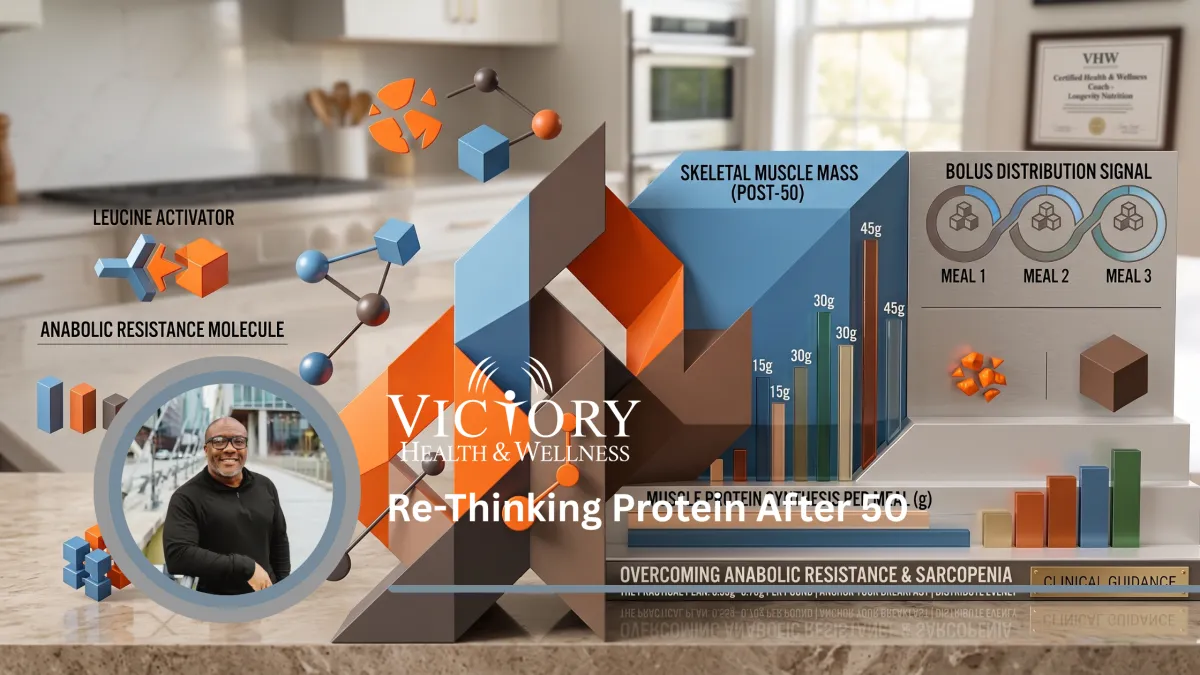
Re-Thinking Protein After 50: Practical Guidance for Vitality and Strength
As we navigate midlife and beyond, our wellness goals often pivot toward maintaining vibrant energy, staying active, and keeping our bodies strong for the long haul. While conventional wisdom once suggested eating lighter as we age, exercise science and nutrition research tell a very different story—especially when it comes to dietary protein.
As a Health & Wellness Coach, my role is to help you bridge the gap between wellness science and your daily routine. Let’s break down why your protein needs shift in midlife and how you can build simple, sustainable habits to support your strength.

The "Why": Supporting Your Body’s Built-In Repair System
As our bodies age, two key factors change how we process protein:
Decreased Protein Sensitivity (Anabolic Resistance): In our 20s and 30s, our muscles readily absorb amino acids from smaller meals to build and repair tissue. After age 50, our muscle tissue becomes less efficient at triggering this repair process. To get the same muscle-maintaining benefit, our bodies require a slightly larger, concentrated dose of protein at mealtime.
Natural Loss of Muscle Mass (Sarcopenia): Starting around age 30, adults naturally begin to lose a small percentage of muscle mass per decade—a process that speeds up after 50. Muscle isn't just about athletic performance; it supports healthy joint mobility, metabolic rate, balance, and overall physical independence.
Pairing adequate dietary protein with regular strength or resistance exercises is one of the most effective lifestyle strategies to preserve your physical foundation.
The Numbers: How Much Protein Do You Actually Need?
Standard government baselines (the RDA) are designed as minimums to prevent basic nutritional deficiencies in general populations. However, longevity researchers and wellness experts recommend a higher daily range for active adults over 50.
A helpful general baseline for healthy mature adults is 0.55 to 0.70 grams of protein per pound of target body weight daily.
General Daily Targets at a Glance
Body WeightDaily Protein Goal Range
140 lbs77 – 98 grams
160 lbs88 – 112 grams1
80 lbs99 – 126 grams
200 lbs110 – 140 grams
Coach’s Note: Nutritional needs are personal. These general targets are designed for overall wellness in healthy adults. If you have pre-existing health conditions—particularly kidney conditions—always consult your primary care physician or a Registered Dietitian before making major changes to your macronutrient intake.
The Strategy: Distribute Protein Throughout the Day
Because our bodies become less sensitive to protein signals as we age, eating a small protein snack in the morning and a massive dinner isn't as effective as spreading your intake evenly.
Aim for roughly 25 to 35+ grams of quality protein per meal across 3 to 4 eating occasions.
[ Breakfast: 30g ] ---> [ Lunch: 35g ] ---> [ Snack: 20g ] ---> [ Dinner: 35g ] (Total Daily Goal Met: ~120g)
What a Practical Day Looks Like Whole-Food First
Breakfast: 3 whole eggs scrambled with ½ cup cottage cheese (~32g protein)
Lunch: Mixed greens topped with 5 oz grilled chicken breast, pumpkin seeds, and olive oil dressing (~35g protein)
Afternoon Snack: 1 cup plain Greek yogurt mixed with fresh berries and chia seeds (~20g protein)
Dinner: 5 oz baked salmon paired with roasted broccoli and ½ cup cooked lentils (~38g protein)
3 Coaching Tips to Build High-Protein Habits
Making lasting lifestyle changes isn't about perfection; it's about small, repeatable steps.
Anchor Your Breakfast: Most people naturally eat plenty of protein at dinner, but fall short at breakfast. Try upgrading your morning meal first by swapping oatmeal or toast for eggs, Greek yogurt, or a clean protein smoothie.
Batch Prep Whole Sources: Keep hard-boiled eggs, cooked poultry, canned tuna, and pre-washed greens stocked in your fridge so assembling a 30-gram protein meal takes under 5 minutes.
Use Supplements Strategically: While whole foods offer essential vitamins and fiber, a high-quality whey or plant-based protein isolate powder is a convenient, practical tool when you're short on time.
References & Further Reading
Bauer, J., et al. (2013). Evidence-based recommendations for optimal dietary protein intake in older people: a position paper from the PROT-AGE Study Group. Journal of the American Medical Directors Association, 14(8), 542–559.
Deutz, N. E., et al. (2014). Protein intake and exercise for optimal muscle function with aging: Recommendations from the ESPEN Expert Group. Clinical Nutrition, 33(6), 929–936.
Devries, M. C., et al. (2018). Changes in Kidney Function Do Not Differ Between Healthy Adults Consuming Higher- Compared with Lower-Protein Diets: A Systematic Review and Meta-Analysis. The Journal of Nutrition, 148(11), 1760–1775.
Disclaimer: The information provided in this blog post is for educational and informational purposes only and is not intended as medical advice or medical nutrition therapy. Always consult with a qualified healthcare provider or licensed medical professional before making significant changes to your diet, exercise routine, or health regimen.