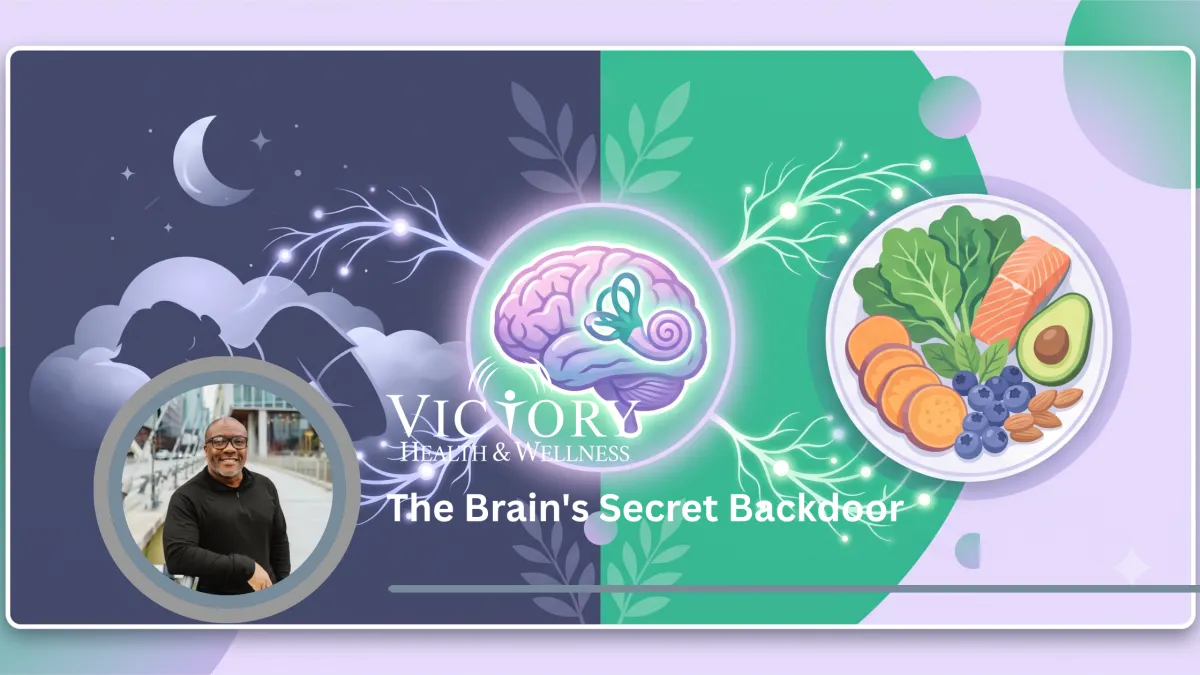
The Brain’s Secret Backdoor: Why Your Dinner and Sleep Habits Dictate Longevity
Imagine sitting in Victory Hearing & Wellness, expecting a standard discussion about decibels and earwax, only to be asked what you had for breakfast or how many times you hit the snooze button this morning. It might seem like a detour, but a Victory Audiologist se the ear not as an isolated island, but as a gateway to the most complex processor in the known universe: your brain.
Cognitive decline is often whispered about as if it were an unavoidable shadow that grows longer with every birthday. However, the emerging science of lifestyle medicine reveals that your cognitive trajectory is largely shaped by the "pillars of health." At Victory Hearing & Wellness, we believe that hearing longevity is inseparable from brain health. We aren't just here to fit devices; we are here to help you master the internal and external environments that allow your mind to thrive.
Sleep as the Brain’s "Restoration and Reset" Process
In our clinic, we view sleep as the ultimate "biological maintenance" period. It is not merely a state of inactivity; it is a highly active preservation system designed to keep you out of harm’s way and reserve the energy necessary for high-level cognition. William Shakespeare was ahead of his time when he described sleep as "nature’s soft nurse," for it is during these hours that the brain performs its most vital repairs.
To protect your cognitive resources, you must respect the two primary stages of the sleep cycle:
N3 (Deep Sleep): This is "slow-wave sleep," where the brain diverts blood flow away from itself and toward the body. This stage is dedicated to "renewing the body," repairing tissues, and boosting the immune system.
REM (Rapid Eye Movement): This is where we "renew the mind." REM is essential for memory consolidation and the replenishment of neurotransmitters like serotonin and dopamine.
When sleep is compromised, your "working memory"—the mental scratchpad used for reasoning and decision-making—is the first thing to fail. For our patients, poor sleep creates a vicious cycle. When you are fatigued, your "willpower tank" is empty. This makes it nearly impossible to maintain healthy habits or, crucially, to provide your brain with the energy required to process the complex auditory signals delivered by a hearing aid.
Combatting "Darkness Deficiency" and Circadian Mismatch
Our biology is governed by a master clock known as the Suprachiasmatic Nucleus (SCN), which synchronizes our internal rhythms with the 24-hour day. However, the "Modern Lifestyle" has created a profound circadian mismatch. We suffer from a lack of high-intensity sunlight during the day and a catastrophic overexposure to artificial light at night.
We call this "darkness deficiency." Your brain possesses a "biological darkness sensor" in the form of melatonin. This hormone is only released when your environment is sufficiently dark, yet exposure to the blue light from screens and LED bulbs can suppress your endogenous melatonin production by over 50%. This isn't just about feeling tired; it is a disruption of the brain's preventive medicine system.
Quick Fixes for Cognitive Syncing:
The Morning Reset: Seek daylight (natural sunlight is best) shortly after waking to anchor your master clock.
The Evening Fade: Three hours before bed, use dimmers to bring your indoor light down. Switch to warmer hues to signal to your brain that it is time to begin the antioxidant cascade.
Digital Discipline: Avoid all blue-light-emitting screens before bed to prevent that 50% hormone suppression that keeps you in a state of "artificial day."
Fueling the Fortress: Nutrition Beyond the Jargon
At Victory Hearing & Wellness, we teach that nutrition is more than just "eating well"—it is the Fuel, Fortress, and Formula for your cognitive performance.
The Fortress (Healthy Fats): We prioritize unsaturated fats and Omega-3s because they are the building blocks of cell membranes. They safeguard cellular health and boost cognition by maintaining the neural integrity of your brain’s communication lines.
The Formula (High-Quality Protein): To offset metabolic decline, older adults should aim for 0.8g of high-quality protein per kg of body weight. This is essential for maintaining the muscle mass that supports metabolic health and steady energy.
The Fuel (Hydration): A critical warning for our older patients: your "thirst mechanism" becomes less sensitive with age. You can be significantly dehydrated even if you don't feel thirsty. Proper fluid balance is the "fuel" your brain needs for rapid-fire processing.
The Stress-Cognition Loop and the Power of Resilience
Chronic stress is the enemy of auditory processing. It triggers the HPA axis, flooding the system with cortisol. While a small amount of stress can be motivating, chronic elevation keeps the brain in a "high alert" state, making it impossible to enter the restorative N3 Deep Sleep stage.
Our clinical philosophy centers on the Internal Locus of Control—the empowering belief that your health is the result of your actions, not just fate. This requires choosing Self-care over Self-comfort. Self-comfort is an external distraction—like reaching for sugar or alcohol to numb stress—which moves your goals backward. Self-care is a proactive, goal-oriented strategy.
Two Resilience Techniques to Try Tonight:
Mindful Breathing: Spend five minutes purposely tracking the rise and fall of your chest. This simple act of presence can help down-regulate a hyper-active stress response.
Progressive Muscle Relaxation (PMR): Starting at your feet, tense each muscle group tightly, hold, and then release. This physical "letting go" signals to the nervous system that the threat has passed, clearing the path for restorative sleep.
Why Treating Hearing Loss is a Lifestyle Medicine Intervention
We often tell our patients that hearing healthcare is a "symphony of care." A hearing aid is a precision instrument, but it is only one member of the orchestra. The "conductor" is your brain. If the conductor is malnourished, stressed, or sleep-deprived, the music will remain out of tune regardless of the technology we use.
Treating hearing loss is a vital lifestyle intervention because it reduces the "cognitive load" on a struggling brain. When sensory input is fragmented, your brain has to work overtime to decode sound, leaving fewer resources for memory and reasoning. By integrating hearing care with the pillars of sleep, nutrition, and stress management, we ensure that the auditory data your ears receive is processed by a brain that is restored, resilient, and ready.
Your Cognitive Longevity Plan
While biology brings changes, your "Internal Locus of Control" determines your trajectory. You have the power to influence how your brain ages by choosing habits that support its natural preservation and restoration processes. Your hearing is not a separate category of wellness; it is a vital pillar of your overall brain health strategy.
Which one of these five pillars—sleep, light, nutrition, stress, or hearing—will you commit to adjusting tonight to protect your brain's future?